Introduction to the Human Machine

Aaron Volkoff

The human body is a fascinating machine, composed of trillions of cells, hundreds of organs, and nearly a dozen organ systems, all working together in a magical dance to keep you upright and moving. Organ systems are groups of organs that interact to provide the body’s primary functions. For example the digestive system includes not only the stomach and intestines but other organs such as the liver, gallbladder and pancreas which are also part of the endocrine system. Each of these systems is highly complex, and the interactions between them are even more intricate. The interactions between systems become even more complex when we move beyond the normal range of functioning. Whether due to exercise, illness, or poor lifestyle choices, the body engages in remarkable processes just to keep us going. This process of returning the body to a normal state is referred to as homeostasis. 

The human body consists of eleven primary organ systems, each with specific roles that contribute to our survival and well-being. These systems include the integumentary, muscular, skeletal, cardiovascular, respiratory, nervous, digestive, urinary, endocrine, lymphatic, reproductive, and integumentary systems. Oftentimes, for teaching purposes we present these systems as discrete. Such as the muscular or the skeletal systems. While this does make sense for teaching purposes, it is not the way the body’s organ systems interact. 
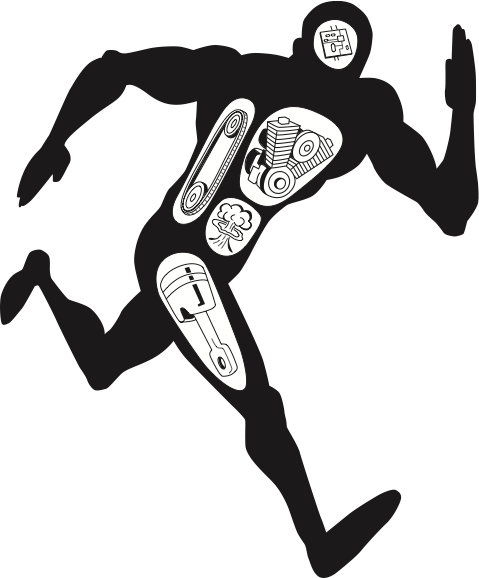
For this article, each system will be framed by what systems in which they interact. Such as the neuromuscular or the musculoskeletal systems. The goal of this article is to provide an overview of each of these body systems and how they interact. Future articles will elaborate on specific systems and their interactions. 


THE SYSTEMS OF LOCOMOTION
THE NEUROMUSCULAR & MUSCULOSKELETAL SYSTEMS


The neuromuscular system is made up of two distinct organ systems: The nervous system and the muscular system. The musculoskeletal system is composed of the muscular and skeletal systems. The nervous system consists of two major divisions: The central nervous system (CNS), which includes the brain and spinal cord, and the peripheral nervous system (PNS), which comprises the peripheral nerves that extend throughout the body. The musculoskeletal system includes both the muscles and the skeleton. The skeleton serves as a structural framework, providing rigidity and acting as anchor points for the muscles, which allow for movement and produce the body’s heat. 


For a muscle to contract, it requires input from the nervous system. This input is known as an action potential. As we develop movement patterns, the brain’s ability to send action potentials (signals) to specific muscles increases. This is how we develop movement patterns. Each nerve innervates a certain number of muscles; this combination of a single nerve and its associated muscles is referred to as a motor unit. Certain parts of the body, such as the fingers, have smaller motor units, while larger muscles, like the glutes, have larger motor units.


THE SYSTEMS OF TRANSPORT
THE CARDIORESPIRATORY SYSTEM


The cardiorespiratory system consists of both the cardiovascular and respiratory systems. The cardiovascular system includes the heart and all blood vessels, including arteries that carry blood away from the heart and veins that return blood to it. The respiratory system facilitates gas exchange through the lungs, trachea, and bronchi. Although the cardiovascular and respiratory systems are distinct, they work in conjunction to provide oxygen to the rest of the body and remove carbon diox. The cardiovascular system also circulates nutrients, while the respiratory system removes carbon dioxide from the blood.


THE MESSAGING SYSTEMS

THE NEUROENDOCRINE SYSTEM


The neuroendocrine system is comprised of the nervous and endocrine systems. The nervous system consists of the brain, spinal cord, and peripheral nerves, while the endocrine system is made up of glands that produce hormones—such as the adrenal, thyroid, pituitary, ovaries, and testes. While these are two separate systems, their functions are closely integrated. 


In biology, we often say that the nervous system produces neurotransmitters and the endocrine system produces hormones; however, the relationship is more complex. For example, glands such as the adrenal glands release hormones like epinephrine, which acts both as a neurotransmitter (in the nervous system) and a hormone (in the endocrine system).

A future article will take a deeper dive into both systems with an attempt to explain how they work interchangeably.


THE SYSTEMS OF DIGESTION & COMMUNICATION
THE BRAIN-GUT CONNECTION


The brain-gut connection involves both the nervous system and the gastrointestinal system. The gastrointestinal system, also known as the digestive system, includes the stomach, intestines, and accessory organs such as the liver and gallbladder. Although the gastrointestinal system is often perceived solely as a system responsible for digestion and nutrient absorption, it serves a much more complex role, producing numerous hormones and being significantly influenced by both the nervous and endocrine systems. Additionally, some organs associated with the gastrointestinal system function as endocrine glands, such as the liver.


While the gastrointestinal (GI) system is responsible for digesting food and absorbing nutrients, it also functions as part of an intricate network involving the nervous and endocrine systems. The enteric nervous system, sometimes called the "second brain," communicates with the CNS via the vagus nerve. 


THE BALANCING & WASTE REMOVAL SYSTEMS

THE EXCRETORY SYSTEMS


The organs that excrete/remove waste from the body may be combined into one system, or they may be separated into distinct components. These include the integumentary system, which encompasses the skin, hair follicles, and sweat glands, as well as the urinary system, comprising the kidneys, ureters, bladder, and urethra. Even the lungs that remove carbon dioxide can be included when discussing the respiratory system. The excretory system plays a crucial role in balancing fluid levels and regulating chemicals, such as electrolytes, in the blood. Without proper excretion, toxic substances would accumulate in tissues, leading to severe health issues such as kidney failure or acidosis.


THE PROTECTION & DEFENSE SYSTEMS

THE IMMUNE & LYMPHATIC SYSTEMS


The immune system is not a single entity; instead, it comprises several different systems. This includes the first line of defense—the skin and lungs. This first line of defense is referred to as the innate immune system. But the immune system is most frequently associated with white blood cells. This is referred to as adaptive as it responds to a threat. The immune system also encompasses the lymphatic system, which includes lymph vessels, lymph nodes, and the spleen. The immune system not only protects against pathogens like bacteria, viruses, fungi, and parasites while also identifying and eliminating abnormal cells that could lead to cancer


The lymph system has a network of vessels similar to the cardiovascular system that contains lymph fluid rather than blood. Along with immunity, the lymph system also removes waste products from tissues that are unable to enter the bloodstream. 


REPRODUCTIVE SYSTEM


While this article will not discuss the organs or processes of reproduction, it is important to note that reproductive organs contain endocrine glands such as the testes and ovaries. 


AN EXAMPLE OF ORGAN SYSTEM INTERACTION IN A HEALTHY STATE


Maintaining a consistent internal balance (homeostasis) is already complex at rest, but this complexity increases significantly when the body transitions from a resting state to physical activity. Exercise, while essential for long-term health, presents immediate physiological challenges as the body adapts to increased demands. During exercise, the musculoskeletal system rapidly depletes its chemical energy reserves to generate ATP, the molecule required for muscle contractions]. 


These contractions have several cascading effects: they generate excess heat, while ATP production increases carbon dioxide levels and creates an acidic environment (often mistakenly called "lactic acid," though it primarily involves lactate and hydrogen ions). In response, the cardiorespiratory system elevates heart and breathing rates to enhance oxygen delivery and carbon dioxide removal. Simultaneously, the neuroendocrine system releases cortisol to manage stress and energy mobilization], while the excretory system expels carbon dioxide through the lungs. The integumentary system also activates, producing sweat to dissipate heat and regulate body temperature.


These short-term disruptions are necessary adaptations that, over time, improve the body's efficiency and resilience, highlighting the dynamic interplay between immediate stress and long-term health benefits.

AN EXAMPLE OF ORGAN SYSTEM INTERACTION IN A DISEASED STATE


Lack of physical activity and/or exercise (musculoskeletal system) leads to a reduced need for chemical energy, also known as food (gastrointestinal system). Most commonly, excessive overconsumption of food leads to excess calories in the bloodstream in the form of excess blood sugar and triglycerides. Note: Over Consumption is not the only cause of increased blood sugar. Some other contributors can cause an increase in blood glucose include eating poor quality foods, stress (neuroendocrine system) which increases cortisol levels and promotes elevated glucose levels in the bloodstream. 


When the body is exposed to an excess of something, it often leads to some response which sometimes includes a resistance against that thing. In this scenario, a chronic increase in sugar released into the blood triggers an increase in the production and release of insulin from the pancreas. If blood insulin levels are chronically elevated, this triggers insulin resistance at the cellular level, causing the pancreas to produce more insulin. Over time, as insulin levels rise, the pancreas may eventually struggle to produce enough insulin to manage blood sugar levels. This condition can lead to a diagnosis of prediabetes or type 2 diabetes, often years after insulin resistance has begun. Furthermore, insulin resistance is a common cause of high blood pressure (cardiovascular). Elevated blood sugar leads to excessive urination to eliminate sugar through the kidneys (excretory). It is important to note, while excessive blood sugar is the primary cause of insulin resistance, there are other causes which include over-salted foods high in saturated fats and certain medications, even some vitamins such as niacin. 


In essence, when a person is exposed to chronically elevated blood sugar levels, their insulin levels will chronically be elevated. This causes the cells to become resistant to insulin. That resistance causes the need for more insulin. Which in turn causes more resistance. This response it a protective mechanism to shield the body from nutrient overload. 


SUMMARY


As you can see, the human body is an incredibly complex and interconnected machine. Examining any system in isolation often provides an incomplete picture, as each system interacts intricately with the others. For example, the endocrine system stimulates bone and muscle growth, the nervous system triggers muscular contractions, and the cardiovascular and respiratory systems work together to increase blood flow and deliver more oxygen to muscles during exercise. None of these systems operate independently; instead, they perform a beautifully coordinated dance to keep us functioning and moving every day.



By Aaron Volkoff April 28, 2026
Linear vs. Undulating Periodization Why Training Doesn’t Need to Look the Same to Produce Results Introduction: Training Without Structure Is Just Activity 
By Aaron Volkoff March 31, 2026
THE BIOLOGY OF ADAPTATION Why the body only gets better after it is stressed, recovered, and repeated
By Aaron Volkoff March 3, 2026
The Biology of Recovery: What Actually Heals Between Workouts (Neuroendocrine, Immune, Sleep, Mitochondria) Introduction: Training Is The Stress, Recovery Is The Adaptation Most people think muscle grows in the weight room. It does not. It is broken down in the weight room. The work you do in the weight room, on the track, or in practice is a controlled stress that temporarily makes you weaker, not stronger. During and immediately after a hard session, you have more tissue damage, more inflammation, more fatigue, and less performance than when you started. The real magic happens in the hours and days between workouts. That window between sessions is when the body decides whether to adapt, stay the same, or start to break down. To understand what actually heals between workouts, we have to zoom out from just the muscle and look at the systems that mediate recovery. The neuroendocrine system determines which hormones are released and when. The immune system cleans up damaged tissue and directs repair. Sleep provides the environment where these signals can operate at full power. Mitochondria, the “powerhouses” of the cell, supply the energy and quality control needed for long-term adaptation. Key point: A training program is not just sets and reps. It is a conversation between stress and recovery. The outcome of that conversation—growth or burnout—depends on how well these systems work together between workouts. What Training Does To The Body: Controlled Damage And Disruption Whether you are lifting heavy, sprinting, or doing long intervals, hard training creates similar categories of disruption: Mechanical stress Metabolic stress Neural and hormonal stress Mechanical stress refers to the micro-tears and structural strain on muscle fibers, tendons, and connective tissue. Strength training in particular produces damage within muscle. This is what leads to delayed onset muscle soreness (DOMS) 24–72 hours after a tough session and is part of the normal remodeling process when managed correctly. Metabolic stress comes from the buildup of byproducts such as hydrogen ions, carbon dioxide, and other waste molecules created when muscles burn through ATP during exercise. High-intensity work increases reliance on anaerobic pathways, producing more metabolic byproducts that must be cleared by the liver, kidneys, lungs, and skin. Neural and hormonal stress shows up through activation of the sympathetic nervous system (the “fight or flight” branch) and the release of stress hormones like epinephrine and cortisol. These signals are useful during exercise, helping mobilize fuel and increase heart rate, but they represent a short-term disruption in homeostasis. At the moment, all of this is necessary. Your body is supposed to be out of balance during a hard session. Recovery is the process of bringing the system back toward balance—and, if you provide enough resources and not too much stress, to a slightly higher level of capacity than before. The Neuroendocrine System: Turning Stress Into Growth The neuroendocrine system—the combined action of the nervous and endocrine systems—is the control center that translates training into hormonal signals. Acute Response: Fight, Fuel, And Focus During a hard workout, the sympathetic nervous system ramps up. Neurons release neurotransmitters like norepinephrine at nerve endings, while the adrenal glands release epinephrine and cortisol into the bloodstream. Epinephrine and norepinephrine increase heart rate, blood pressure, and energy availability. Cortisol helps mobilize glucose and fatty acids, making energy available to working muscles. These stress hormones are not “bad.” In the acute setting, they are essential for performance. The problem arises when the stress signal never shuts off. That is where recovery comes in. Transition To Recovery: Shifting From Breakdown To Rebuilding After the workout, if you stop moving, refuel, and allow the body to down-regulate, the neuroendocrine system begins to shift gears. Sympathetic activity decreases, parasympathetic (“rest and digest”) activity increases. Cortisol levels gradually fall back toward baseline instead of staying elevated all day. Anabolic hormones such as growth hormone (GH), testosterone, and insulin start to play a larger role, particularly after sleep and feeding. Growth hormone, released in pulses from the pituitary gland, supports tissue repair, fat metabolism, and collagen synthesis. Insulin and IGF-1, especially after a mixed meal with protein and carbohydrates, help move amino acids and glucose into muscle cells, where they can be used for protein synthesis and glycogen restoration. On a molecular level, pathways like mTOR become more active when energy and amino acids are available. mTOR drives muscle protein synthesis and growth, while pathways like AMPK, activated more during energy stress, support mitochondrial adaptations and fuel utilization. Key point: You cannot separate “hormones” from “recovery.” The pattern of hormones before, during, and especially after training determines whether the body gets a “break down more” or a “build back stronger” message. The Immune System: Cleanup Crew And Construction Team When you lift heavy, sprint, or play a high-intensity game, you are not just fatiguing muscles—you are creating micro-injuries throughout the tissue. The immune system is responsible for cleaning up that damage and coordinating repair. Inflammation: Not The Villain After tissue is stressed, immune cells move into the area and create a localized inflammatory response. This includes swelling, increased blood flow, and the release of signaling molecules called cytokines. Inflammation has two key roles in recovery: Removing damaged cells and debris. Signaling satellite cells and other repair mechanisms to start rebuilding. This is why some soreness and stiffness after a new or hard training block is normal. It is evidence that your immune system is doing its job. Problems arise when the “repair project” never finishes—either because the stress keeps coming with no break, or because other systems (nutrition, sleep, neuroendocrine) are not providing the resources to complete the job. When Recovery Goes Wrong: Chronic Inflammation If training volume is too high, rest is inadequate, or lifestyle stress is stacked on top of exercise stress, the immune system can remain in a chronically activated state. Instead of short-term, targeted inflammation around specific tissues, you start to see more systemic inflammation and elevated stress hormones. This chronic, low-grade inflammatory state is associated with: Slower tissue repair More frequent illnesses Joint and tendon pain that never quite resolves Reduced mitochondrial function over time Mitochondrial dysfunction and chronic inflammation often feed each other. Damaged mitochondria can leak signals that trigger immune pathways, while ongoing inflammation can further damage mitochondria. Key point: The immune system is not just about fighting colds. It is the construction crew that rebuilds your tissue between workouts. For that crew to work, it needs time off from constant demolition. Mitochondria: Powering The Repair Process Every aspect of recovery—building new proteins, pumping ions to restore membrane potentials, running immune responses, even consolidating memories during sleep—requires energy. That energy comes in the form of ATP, and mitochondria are where most of that ATP is made. Mitochondria Do More Than Make Energy Mitochondria are organelles found in almost every cell except red blood cells. Their primary role is to convert the energy from food into ATP through processes like glycolysis, the Krebs cycle, and the electron transport chain. Beyond ATP production, mitochondria: Help regulate calcium levels in cells Influence cell death and survival Produce heat Participate in hormone synthesis, including stress and sex hormones. Because of these roles, mitochondrial health directly affects how quickly you recover, how much fatigue you experience, and how well your body adapts over time. Repairing The Powerhouses: Mitophagy And Biogenesis Hard training and normal metabolism generate reactive oxygen species (ROS), which can damage mitochondrial structures over time. The body has a quality control system called mitophagy—essentially mitochondrial recycling—that identifies and removes damaged mitochondria so new, more efficient ones can be formed. Certain conditions make this quality control and rebuilding process more effective: Regular exercise, especially aerobic and interval work, signals the body to create more and better mitochondria. Periods of energy stress, like fasting or simply not over-eating, can stimulate mitophagy. Adequate sleep allows mitochondria to repair oxidative damage and restore function. On the other hand, chronic overnutrition, poor sleep, and a sedentary lifestyle slow mitophagy and allow damaged mitochondria to accumulate, leading to less efficient energy production and more fatigue. Key point: You do not just recover muscles between workouts—you also recover mitochondria. Training provides the stimulus to improve them, and recovery provides the conditions to actually do the work. Sleep: The Master Recovery Environment If training is the spark and hormones and mitochondria are the tools, sleep is the workshop where almost all of the heavy repair work happens. Quality sleep is one of the most powerful, and most underrated, performance enhancers available. What Happens During Sleep? During deep non-REM sleep, several key processes related to recovery take place: Growth hormone pulses: GH release peaks shortly after you fall asleep and during early deep sleep cycles. This hormone supports protein synthesis, tissue repair, and fat metabolism. Neuroendocrine reset: Cortisol tends to be lower at night, then slowly rises toward morning. When sleep is disrupted or cut short, cortisol patterns shift, which can impair recovery, mood, and glucose regulation. Immune recalibration: Sleep helps the immune system coordinate inflammatory and anti-inflammatory responses. Poor sleep is associated with higher baseline inflammation and increased illness risk. Mitochondrial repair: Deep sleep provides a low-stress environment where mitochondria can repair oxidative damage and restore their ability to produce ATP effectively. Sleep restriction has been shown to reduce mitochondrial respiration in muscle, which directly translates to reduced performance and recovery capacity. In simple terms, sleep is when your body runs its software updates, takes out the cellular trash, and rebuilds hardware. If you consistently cut that process short, you will eventually pay for it in the form of slower recovery, stalled progress, and higher risk of injury or illness. Sleep And The Athlete “Recovery Budget” For athletes and active individuals, sleep is part of the recovery budget alongside nutrition, hydration, and rest days. If an athlete increases training load but does not increase sleep—or worse, reduces sleep—something has to give. Usually, that “something” is performance, immune resilience, or mental health. Key point: You can think of each night of sleep as a recovery session. Missing or shortening those sessions is the same as skipping rehab or treatment—you may not notice it immediately, but over weeks and months it changes the trajectory of your progress. Putting It All Together: How Systems Cooperate Recovery is not one system working in isolation. It is a coordinated effort: Training creates mechanical, metabolic, and neural stress. The neuroendocrine system responds acutely with stress hormones, then, if given the chance, shifts toward anabolic and repair-supporting hormones. The immune system cleans damaged tissue and initiates rebuilding. Mitochondria provide the energy and adapt to future demands by improving their number and function. Sleep ties it together by providing the environment for hormonal pulses, immune coordination, and mitochondrial repair. When these systems are in balance—with appropriate training stress, adequate sleep, supportive nutrition, and reasonable life stress—the result is positive adaptation: more strength, better endurance, improved resilience. When they are out of balance—too much stress, not enough recovery—the same systems that should help you adapt instead drive fatigue, illness, and plateau. Key point: What actually heals you between workouts is not a single supplement, tool, or gadget. It is the coordinated work of your neuroendocrine system, immune system, mitochondria, and sleep. Training is the signal. Recovery determines how well you can listen to it.
By Aaron Volkoff December 28, 2025
By Aaron Volkoff November 2, 2025
By Aaron Volkoff July 29, 2025
By Aaron Volkoff June 29, 2025
More Posts